
If you’ve been in a car accident—even a minor fender-bender—you might feel okay at first. No broken bones, no visible injuries, so you assume everything’s fine. But here’s what many people don’t realize: auto accident injuries often don’t show up right away. In fact, some of the most common musculoskeletal injuries from collisions can take hours, days, or even weeks to manifest. By the time pain, stiffness, or headaches appear, soft tissue damage may already be well-established. That’s why seeking chiropractic care soon after an auto accident, even when you feel “fine,” can make a significant difference in your recovery and long-term health. At Bear Chiropractic in Grand Rapids, MI, we see patients every week who wished they’d come in sooner after their accident. This article will explain why early chiropractic evaluation matters, what happens to your body during a collision, and how conservative care can support your healing process.
Why should you see a chiropractor after an auto accident? Because car accidents cause sudden, forceful movements that can injure muscles, ligaments, joints, and the spine—often without immediate symptoms. Chiropractors are trained to assess and address these musculoskeletal injuries early, helping reduce pain, restore function, and prevent chronic issues from developing.
Table of Contents
- What Happens to Your Body During a Car Accident
- Common Auto Accident Injuries Chiropractors Treat
- Why Symptoms Are Often Delayed
- The Importance of Early Chiropractic Evaluation
- How Chiropractic Care Supports Auto Accident Recovery
- What to Expect During Your First Visit
- Practical Tips to Support Your Recovery
- When to See a Chiropractor After an Accident
- Injury Comparison Table
- Myths vs. Facts About Auto Accident Care
- Final Thoughts
- Frequently Asked Questions
- TL;DR Summary
What Happens to Your Body During a Car Accident
Even low-speed collisions generate tremendous force. When a vehicle stops suddenly or gets hit from behind or the side, your body experiences rapid acceleration and deceleration. Your seatbelt holds your torso in place, but your head, neck, and upper back can whip forward and backward in a fraction of a second. This violent motion stretches and tears soft tissues—muscles, ligaments, tendons, and joint capsules—beyond their normal range.
The physics of a car accident put stress on your spine in ways your body isn’t designed to handle. Your neck, in particular, acts like a whip during rear-end collisions. The lower cervical spine absorbs enormous tension, while the upper cervical joints compress. Meanwhile, your shoulders, mid-back, and lower back brace against the impact, often resulting in muscle spasms, joint misalignments, and nerve irritation.
What makes these injuries tricky is that adrenaline floods your system immediately after a crash. Adrenaline is your body’s natural painkiller and stress hormone. It helps you stay calm, check on passengers, exchange insurance information, and get to safety. But it also masks pain signals. You might walk away from the scene feeling fine, only to wake up the next morning barely able to turn your head.
Common Auto Accident Injuries Chiropractors Treat
Here in Grand Rapids, we see a wide range of auto accident injuries at Bear Chiropractic. Some are immediately obvious, while others develop gradually. Understanding these common injuries can help you recognize when something isn’t right.
Whiplash and Neck Strain
Whiplash is the most well-known car accident injury, and for good reason—it’s extremely common. Whiplash occurs when your neck hyperextends and hyperflexes rapidly, straining the muscles and ligaments that support your cervical spine. Symptoms include neck pain, stiffness, reduced range of motion, headaches, and sometimes dizziness or visual disturbances. Without proper care, whiplash can lead to chronic neck pain and long-term disability.
Back Pain and Spinal Misalignments
Your thoracic and lumbar spine take significant force during a collision, especially if you’re twisted or bracing at the moment of impact. This can cause subluxations—misalignments in the vertebrae—that irritate nerves and create muscle tension. Mid-back and low back pain are frequently reported weeks after an accident, even when initial X-rays show no fractures.
Shoulder and Upper Back Injuries
The force of a seatbelt across your chest can strain shoulder muscles and irritate the joints where your collarbone meets your shoulder blade. Rotator cuff injuries, shoulder impingement, and upper trapezius strain are common, particularly in side-impact collisions.
Headaches and Migraines
Post-accident headaches often stem from neck injuries, muscle tension, or changes in spinal alignment. Cervicogenic headaches—those originating from the neck—are especially common after whiplash. These headaches feel like they start at the base of the skull and radiate forward, sometimes mimicking migraines.
Nerve Irritation and Radiating Pain
When vertebrae shift or soft tissues swell, nerves can become compressed or irritated. This may cause tingling, numbness, or radiating pain down your arms or legs. While serious nerve damage requires immediate medical attention, many cases of post-accident nerve irritation respond well to conservative chiropractic care.
Why Symptoms Are Often Delayed
One of the biggest mistakes people make after a car accident is assuming they’re uninjured because they don’t feel pain immediately. But delayed symptoms are the rule, not the exception, when it comes to soft tissue injuries.
As mentioned earlier, adrenaline suppresses pain in the immediate aftermath of trauma. Your body is in survival mode, prioritizing getting you to safety over signaling discomfort. Once adrenaline levels drop—usually within a few hours to a day—pain and stiffness start to emerge.
Inflammation also takes time to develop. When soft tissues are injured, your body responds with an inflammatory process designed to promote healing. But inflammation also causes swelling, which puts pressure on nerves and restricts movement. This process can take 24 to 72 hours to fully manifest, which is why many accident victims feel worse on the second or third day after the crash.
Additionally, your body may compensate for injuries initially. If your neck hurts to turn right, you’ll instinctively turn your whole body instead. If your lower back is stiff, you’ll change how you walk or sit. These compensations can mask the original injury while creating secondary problems in other areas. Before long, you have multiple areas of pain and dysfunction, making it harder to trace everything back to the accident.
The Importance of Early Chiropractic Evaluation
Research consistently shows that early intervention leads to better outcomes for musculoskeletal injuries. The sooner you address soft tissue damage, joint dysfunction, and spinal misalignments, the less likely you are to develop chronic pain or long-term complications.
Chiropractic care focuses on restoring normal biomechanics to the spine and joints. When vertebrae are misaligned or joints aren’t moving properly, surrounding muscles tighten, nerves become irritated, and healing slows down. By addressing these mechanical issues early, chiropractors can help reduce inflammation, improve circulation, and create an environment where your body can heal more efficiently.
Early evaluation also establishes a documented timeline of your injuries. If you need to file an insurance claim or pursue legal action related to the accident, having a professional assessment within days of the collision strengthens your case. Insurance companies and attorneys take timely medical documentation seriously. Waiting weeks or months to seek care can raise questions about whether your injuries were truly caused by the accident.
At Bear Chiropractic in Grand Rapids, MI, we encourage patients to schedule an evaluation within the first few days after an accident, even if symptoms are mild or absent. A thorough examination can identify problems before they become chronic, and early conservative care may prevent the need for more invasive treatments down the road.
How Chiropractic Care Supports Auto Accident Recovery
Chiropractic care after an auto accident is individualized and focused on your specific injuries and needs. Here’s how chiropractors typically approach post-accident care:
Comprehensive Examination and Assessment
Your first visit will include a detailed history of the accident, a physical examination, orthopedic and neurological tests, and possibly imaging if needed. We assess your posture, range of motion, muscle strength, reflexes, and areas of tenderness. This helps us understand the full extent of your injuries and develop a personalized care plan.
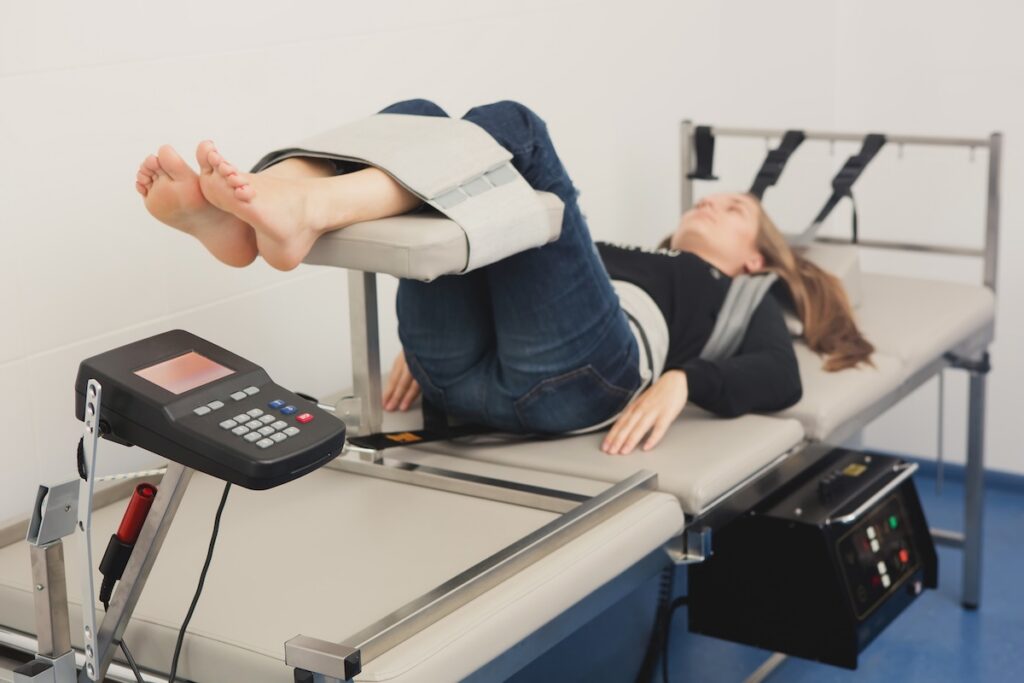
Spinal Adjustments and Joint Mobilization
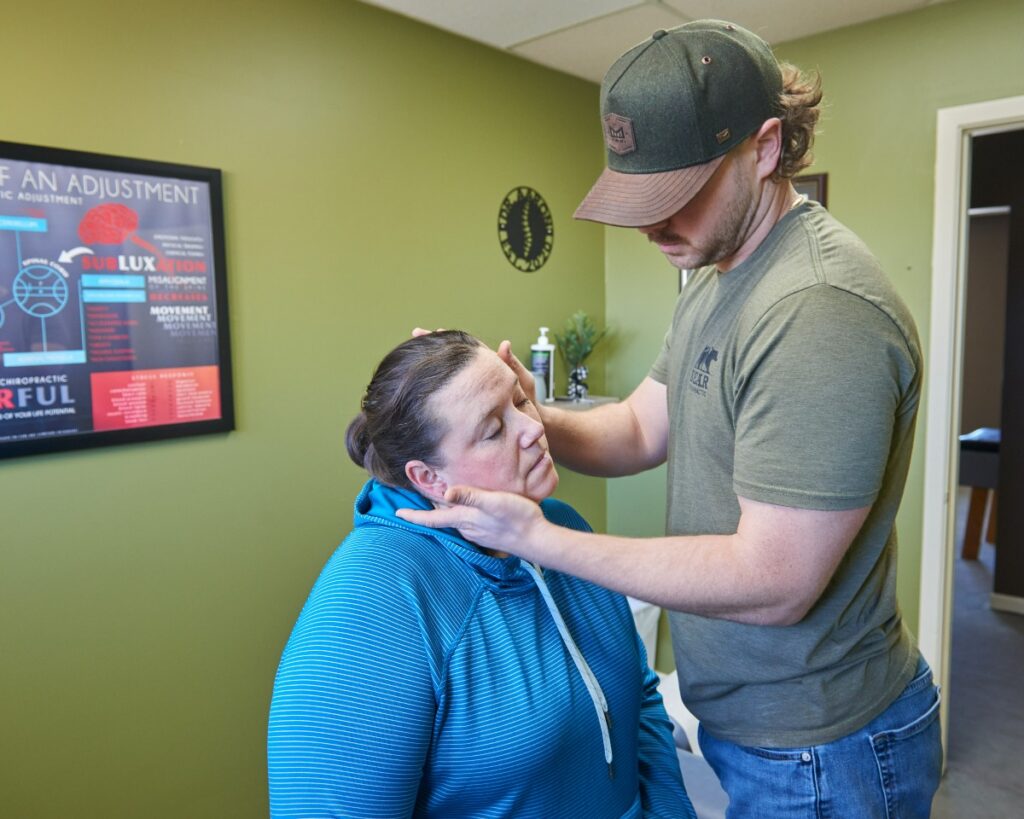
Gentle chiropractic adjustments help restore normal alignment and movement to the spine and other joints. When vertebrae are misaligned, they can irritate nerves, restrict motion, and create muscle imbalances. Adjustments reduce nerve interference, improve joint function, and allow your body to heal more effectively. After an accident, we use gentle techniques appropriate for acute injuries—there’s no aggressive twisting or popping.
Soft Tissue Therapy
Muscles, ligaments, and tendons need attention too. We often incorporate soft tissue techniques like myofascial release, trigger point therapy, or instrument-assisted techniques to reduce muscle spasm, break up scar tissue, and improve circulation. This helps speed healing and reduces chronic tightness.
Rehabilitation and Strengthening
As your pain decreases and mobility improves, we introduce targeted exercises to rebuild strength and stability. Weak or imbalanced muscles can perpetuate poor posture and spinal dysfunction. Rehabilitative exercises help retrain your body to move correctly and reduce the risk of re-injury.
Lifestyle and Ergonomic Guidance
We provide practical advice on sleeping positions, work ergonomics, activity modifications, and self-care strategies to support your recovery between visits. Small changes can make a big difference in how quickly you heal.
What to Expect During Your First Visit
If you’ve never been to a chiropractor before, or you’re new to Bear Chiropractic, here’s what your first visit after an auto accident will typically look like.
You’ll start by filling out paperwork that includes details about the accident: date, time, type of collision, whether you went to the ER, and your current symptoms. Be as thorough as possible—even minor details can be important.
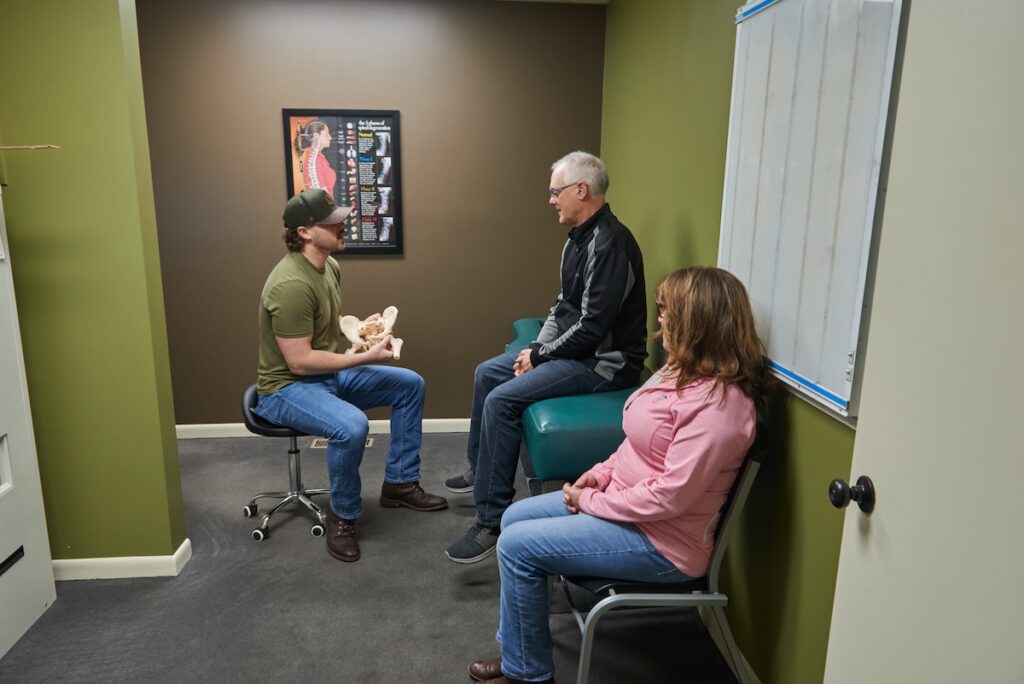
Next, Dr. Bear will sit down with you to discuss your accident and how you’re feeling. This is your chance to describe your symptoms, concerns, and any changes you’ve noticed since the crash. We’ll ask about pain levels, stiffness, headaches, sleep quality, and how your injuries are affecting your daily activities.
The physical examination includes posture analysis, spinal palpation (feeling for misalignments and muscle tension), range of motion testing, and neurological checks. We may also take X-rays if there’s concern about structural damage or if imaging is needed to guide your care plan.
After the examination, we’ll review our findings with you and explain what we found. If chiropractic care is appropriate, we’ll outline a treatment plan, discuss frequency and duration of visits, and answer any questions you have. If we identify red flags or conditions outside our scope, we’ll refer you to the appropriate medical specialist.
Many patients receive their first adjustment on the same day if they’re comfortable and it’s clinically appropriate. Others prefer to wait until the second visit. Either way, our goal is to make you feel informed, comfortable, and confident in your care.
Practical Tips to Support Your Recovery
Chiropractic care is just one piece of the puzzle. What you do at home between visits plays a big role in how quickly and completely you recover. Here are some practical, evidence-supported tips to support your healing process:
Move gently but regularly. Complete rest might seem like a good idea, but prolonged inactivity can lead to stiffness and muscle weakness. Gentle movement—like short walks, easy stretching, and basic daily activities—helps maintain circulation and flexibility. Listen to your body and avoid movements that cause sharp pain.
Apply ice in the first 48-72 hours. Ice helps reduce inflammation and numb acute pain. Apply an ice pack wrapped in a towel to injured areas for 15-20 minutes several times a day during the first few days after the accident. After the initial inflammatory phase, heat may be more beneficial for relaxing tight muscles.
Sleep in a supportive position. Sleep is when your body does most of its healing. If you have neck pain, try sleeping on your back with a supportive pillow that keeps your neck in a neutral position. Side sleepers should use a pillow that fills the space between the shoulder and head. Avoid sleeping on your stomach, which twists the neck and strains muscles.
Stay hydrated and eat anti-inflammatory foods. Proper hydration supports tissue healing and helps flush metabolic waste from injured areas. Incorporate foods rich in omega-3 fatty acids, antioxidants, and vitamins—like fatty fish, leafy greens, berries, and nuts—to naturally reduce inflammation.
Avoid prolonged sitting or awkward postures. Sitting for long periods puts extra stress on your spine and can aggravate pain. If you work at a desk, take breaks every 30-45 minutes to stand, stretch, and walk around. Adjust your workstation so your monitor is at eye level and your chair supports your lower back.
Follow your care plan consistently. Skipping appointments or stopping care too early can allow injuries to heal improperly, leading to chronic pain or reduced function. Stick with your recommended treatment schedule and communicate openly with your chiropractor about your progress.
When to See a Chiropractor After an Accident
Ideally, you should schedule a chiropractic evaluation within the first few days after your accident, even if you don’t have symptoms yet. Early assessment allows us to detect injuries before they become symptomatic and intervene while tissues are still in the acute healing phase.
However, it’s never too late to seek care. Many patients don’t realize their chronic neck pain, headaches, or back stiffness stem from an old car accident until months or even years later. If you’re dealing with lingering symptoms from a past collision, chiropractic care can still help improve function and reduce pain.
Seek chiropractic care promptly if you notice any of the following after an auto accident: neck pain or stiffness, back pain, headaches (especially at the base of the skull), shoulder pain, reduced range of motion, muscle spasms, tingling or numbness in arms or legs, dizziness, or fatigue.
On the other hand, some symptoms require immediate emergency medical attention before seeing a chiropractor. Go to the ER or call 911 if you experience: severe headache with confusion or loss of consciousness, difficulty breathing or chest pain, severe abdominal pain, inability to move limbs or loss of bladder/bowel control, visible bone fractures, or rapidly worsening neurological symptoms.
Chiropractic care is excellent for musculoskeletal injuries, but we always prioritize your safety. If we identify serious medical conditions during your evaluation, we’ll refer you to the appropriate healthcare provider immediately.
Injury Comparison Table
| Type of Injury | Common Symptoms | Typical Onset | How Chiropractic Helps |
|---|---|---|---|
| Whiplash | Neck pain, stiffness, headaches, dizziness | 24-72 hours post-accident | Restores cervical alignment, reduces muscle spasm, improves mobility |
| Lower Back Strain | Low back pain, muscle tightness, difficulty bending | Immediate to 48 hours | Adjustments reduce joint dysfunction, soft tissue work relaxes muscles |
| Shoulder Injury | Shoulder pain, limited arm movement, tenderness | 24-72 hours post-accident | Joint mobilization, muscle therapy, corrective exercises |
| Cervicogenic Headache | Headache starting at skull base, neck stiffness | 2-7 days post-accident | Cervical adjustments, myofascial release, posture correction |
| Thoracic Spine Dysfunction | Mid-back pain, rib discomfort, breathing difficulty | Immediate to 72 hours | Thoracic adjustments, breathing exercises, soft tissue therapy |
Myths vs. Facts About Auto Accident Care
Myth: If You Don’t Have Symptoms Right Away, You’re Not Injured
Fact: Soft tissue injuries commonly have delayed onset due to adrenaline and inflammation timelines. Many serious injuries don’t produce symptoms for hours or days. Early evaluation is important even when you feel fine.
Myth: You Should Only See a Medical Doctor After a Car Accident
Fact: While emergency medical care is critical for fractures, head trauma, and internal injuries, chiropractors are highly trained to diagnose and treat musculoskeletal injuries. Many patients benefit most from coordinated care that includes both medical evaluation and chiropractic treatment.
Myth: Chiropractic Adjustments After an Accident Are Painful and Aggressive
Fact: Chiropractors use gentle, modified techniques when treating acute injuries. We adjust our approach based on your pain level, tissue condition, and comfort. Post-accident care is designed to support healing, not cause additional trauma.
Myth: You Have to Wait Until Your Pain Gets Really Bad Before Seeking Care
Fact: Waiting for pain to become severe often means waiting for inflammation and scar tissue to set in. Early intervention leads to faster recovery and better long-term outcomes. Don’t wait—get evaluated soon after the accident.
Myth: Insurance Won’t Cover Chiropractic Care for Auto Accidents
Fact: Most auto insurance policies include personal injury protection or medical payments coverage that applies to chiropractic care. Many health insurance plans also cover accident-related treatment. Our team at Bear Chiropractic can help you navigate your coverage options.
Final Thoughts
Car accidents can be stressful and overwhelming, and dealing with injuries on top of vehicle repairs and insurance claims can feel like too much to handle. But your health should always come first. Even if you feel fine right now, having a professional evaluation gives you peace of mind and protects your long-term wellbeing.
Here at Bear Chiropractic in Grand Rapids, MI, we’ve helped countless patients recover from auto accident injuries using safe, conservative, individualized care. Dr. Bear and our team understand the unique challenges that come with these injuries, and we’re committed to supporting you every step of the way—from your first visit through full recovery.
If you’ve been in an accident recently, or if you’re dealing with lingering symptoms from a past collision, we encourage you to reach out. The sooner we can evaluate your condition and begin care, the better your chances of a complete, comfortable recovery. You don’t have to live with chronic pain or limited mobility. Let us help you get back to the activities and lifestyle you love.
Frequently Asked Questions
How soon after a car accident should I see a chiropractor?
Ideally within the first 72 hours, even if you don’t have symptoms yet. Early evaluation helps identify hidden injuries and establish a documented timeline for your care. However, it’s never too late to seek chiropractic treatment if you’re experiencing delayed or chronic symptoms.
Will chiropractic adjustments hurt after an accident?
Chiropractors use gentle, modified techniques for acute injuries. While you may feel some discomfort during examination or initial treatment, adjustments should not cause sharp pain. We always work within your comfort level and adjust our approach based on your condition.
Can I see a chiropractor if I’m already seeing a medical doctor for my injuries?
Absolutely. Chiropractic care often works well alongside medical treatment, physical therapy, and other conservative approaches. Many doctors appreciate the role chiropractors play in addressing musculoskeletal injuries and refer patients for co-management.
How long will I need chiropractic care after an auto accident?
It varies based on the severity of your injuries, your overall health, and how quickly your body responds to treatment. Some patients feel significantly better within a few weeks, while more serious injuries may require several months of care. Your chiropractor will provide a personalized timeline based on your examination findings.
Does insurance cover chiropractic care for car accident injuries?
Most auto insurance policies include medical coverage that applies to chiropractic treatment. This often falls under personal injury protection, medical payments coverage, or third-party liability claims. Our office can help verify your coverage and assist with paperwork.
What if I don’t have health insurance or auto coverage?
Many chiropractic offices, including Bear Chiropractic, offer flexible payment options and can work with you to make care affordable. Don’t let insurance concerns prevent you from getting the evaluation and treatment you need after an accident.
TL;DR Summary
- Auto accident injuries often have delayed symptoms due to adrenaline and inflammation timelines, making early evaluation critical even when you feel fine.
- Common injuries include whiplash, back strain, shoulder injuries, headaches, and nerve irritation—all conditions chiropractors are trained to assess and treat.
- Chiropractic care focuses on restoring proper spinal alignment, reducing muscle tension, and supporting natural healing through gentle adjustments, soft tissue therapy, and rehabilitation.
- Early intervention leads to better outcomes, faster recovery, and reduced risk of chronic pain or long-term complications.
- At Bear Chiropractic in Grand Rapids, MI, we provide individualized, compassionate care to help auto accident victims recover safely and completely.