
Most of us don’t think twice about sitting down. We sit at our desks, sit in our cars, sit on the couch after a long day, and then we do it all over again tomorrow. But here in Grand Rapids, MI, a growing number of patients are walking through the doors at Bear Chiropractic with the same complaint: their back, neck, or hips are hurting, and they can’t figure out why. For many of them, the answer is simpler than they expect. Prolonged sitting may be quietly wreaking havoc on their spine, one hour at a time.
This article is here to help you understand exactly what happens to your body when you sit all day — not to scare you, but to empower you with knowledge so you can make better choices starting today.
What does sitting all day actually do to your spine?
Prolonged sitting places abnormal pressure on the spinal discs, shortens key muscle groups, and gradually pulls the spine out of its natural alignment. Over time, these changes can contribute to pain, stiffness, nerve irritation, and reduced mobility, often without any single dramatic moment of injury.
Why Sitting Is Hard on Your Spine
The human spine was designed for movement. It is a beautifully engineered structure of vertebrae, discs, ligaments, and muscles that works best when we are walking, bending, lifting, and shifting positions throughout the day. When we sit still for hours on end, we essentially put that entire system into a kind of suspended stress — and that stress accumulates.
Dr. Aaron Zimmerman at Bear Chiropractic in Grand Rapids, MI sees this pattern constantly. Patients come in with vague aches that have been building for months or even years, and when they describe their daily routine, sitting for six, eight, or even ten or more hours a day is almost always part of the picture. The good news is that awareness is the first step toward change, and even modest adjustments in how you sit and how often you move can make a meaningful difference.
Let’s walk through the eight specific ways that prolonged sitting may be harming your spine right now.
1. It Increases Pressure on Your Spinal Discs
Your spinal discs are the cushion-like structures that sit between each vertebra. They absorb shock, allow for movement, and keep your vertebrae from grinding against each other. When you stand or walk, the pressure on these discs is relatively well distributed. But when you sit, especially in a slouched or forward-leaning position, research suggests that intradiscal pressure increases significantly compared to standing.
Over time, this sustained pressure can cause the discs to lose hydration and become less resilient. This is one of the key reasons that people who sit for long hours are more prone to disc-related problems, including bulging or herniated discs in the lower back. If you’ve ever felt that deep, achy lower back pain after a long day at your desk, disc pressure is likely a contributing factor.
2. It Encourages Poor Posture and Postural Collapse
We all start out the workday with good intentions about sitting up straight. But within an hour or two, most of us have drifted into a slouch. This is not a character flaw, but simply what happens when we ask muscles that aren’t conditioned for sustained effort to hold a position for hours without a break.
When the spine collapses forward into a rounded position, the natural curves of the spine become distorted. The lumbar lordosis — the inward curve of the lower back — tends to flatten or reverse. The thoracic spine rounds forward excessively. The head and neck drift forward in front of the shoulders. This entire chain of postural shifts puts abnormal stress on the spinal joints, ligaments, and the muscles trying to hold everything together. At Bear Chiropractic, correcting this kind of postural collapse is one of the most common goals Dr. Aaron Zimmerman works toward with patients in the Grand Rapids community.
3. It Tightens Your Hip Flexors and Weakens Your Core
When you sit with your hips bent at roughly 90 degrees for extended periods, the hip flexor muscles, specifically the iliopsoas, remain in a shortened position. Over time, they begin to adapt to that shortened length and become chronically tight. Tight hip flexors pull the pelvis into an anterior tilt (a forward tipping position), which in turn exaggerates the curve of the lower back and places extra stress on the lumbar spine.
At the same time, the core muscles, which are essential for supporting the spine, are largely switched off while you’re seated in a chair. You’re relying on the chair for support rather than your own musculature. Weeks and months of this leads to core weakness that makes the spine even more vulnerable to pain and injury, both at work and during everyday activities.
4. It Reduces Blood Flow and Nutrient Exchange
Movement is what drives circulation throughout the body, and spinal health depends on good circulation more than many people realize. The spinal discs are largely avascular — meaning they don’t have a direct blood supply of their own. Instead, they receive nutrients through a process called imbibition, which essentially means they absorb nutrients from surrounding fluid when the spine moves and the discs are cyclically loaded and unloaded.
When you sit still for hours, this process slows dramatically. The discs become starved of the nutrients they need to stay healthy and resilient. Muscles also experience reduced blood flow, which contributes to that familiar stiff, heavy feeling after sitting for a long stretch. Getting up and moving regularly isn’t just a comfort measure; it is genuinely essential for the long-term health of your spinal tissues.
5. It Strains Your Neck and Upper Back
If you work at a computer, you’ve probably noticed neck tension or upper back tightness at some point during your day. This is directly connected to how sitting affects the cervical spine and the muscles of the upper back and shoulders. As the thoracic spine rounds forward and the head drifts in front of the body — a pattern sometimes called “forward head posture” — the mechanical load on the cervical spine increases substantially.
Evidence suggests that for every inch the head moves forward from its ideal position over the shoulders, the effective weight the neck must support increases considerably. The muscles of the upper back, particularly the trapezius and levator scapulae, work overtime trying to hold the head up. This sustained effort leads to muscle fatigue, trigger points, and the chronic neck and shoulder tension that so many desk workers experience on a daily basis.
6. It Creates Muscle Imbalances Over Time
Prolonged sitting doesn’t just affect the spine directly; it creates a cascade of muscle imbalances throughout the entire body that eventually impact spinal alignment and function. Certain muscles become chronically shortened and overactive (like the hip flexors, chest muscles, and upper trapezius), while others become lengthened and underactive (like the glutes, deep core stabilizers, and mid-back muscles).
This imbalance is sometimes described in chiropractic and physical therapy circles as “upper crossed syndrome” for the upper body and “lower crossed syndrome” for the hips and lower back. These patterns don’t just cause discomfort, but they alter the mechanics of how you move throughout the day, making you more susceptible to injury even during simple activities like picking something up off the floor or reaching overhead.
7. It Can Contribute to Nerve Compression
The spine is the primary passageway for the nervous system. The spinal cord runs through the vertebral canal, and spinal nerves branch off between each pair of vertebrae to supply sensation and motor function to the rest of the body. When postural distortions, disc problems, or joint dysfunction develop as a result of prolonged sitting, these structures can begin to encroach on the space where the nerves travel.
Nerve compression in the lumbar spine can produce symptoms like radiating pain, numbness, or tingling down the leg — a pattern that many people know as sciatica. Compression in the cervical spine can produce similar symptoms into the arms and hands. Many patients who visit Bear Chiropractic in Grand Rapids are surprised to learn that the tingling in their fingers or the aching in their leg may actually be originating from their spine and may be connected to their sitting habits.
8. It May Accelerate Spinal Degeneration
Every spine shows some degree of natural wear and change over time. That’s simply part of aging. But the rate at which that process occurs is influenced by how well we take care of our spine throughout our lives. Chronic postural stress, poor disc nutrition, muscle imbalances, and repetitive mechanical strain from years of prolonged sitting can all contribute to earlier or more pronounced degenerative changes in the spine.
These changes, including disc thinning, facet joint arthritis, and osteophyte (bone spur) formation, are not inevitable consequences of a sedentary lifestyle, but evidence indicates that poor spinal mechanics and lack of movement are contributing factors. The encouraging truth is that the spine is remarkably adaptable, and many people experience significant improvement in their symptoms and function when they commit to better movement habits and appropriate care.
How Chiropractic Care Can Help
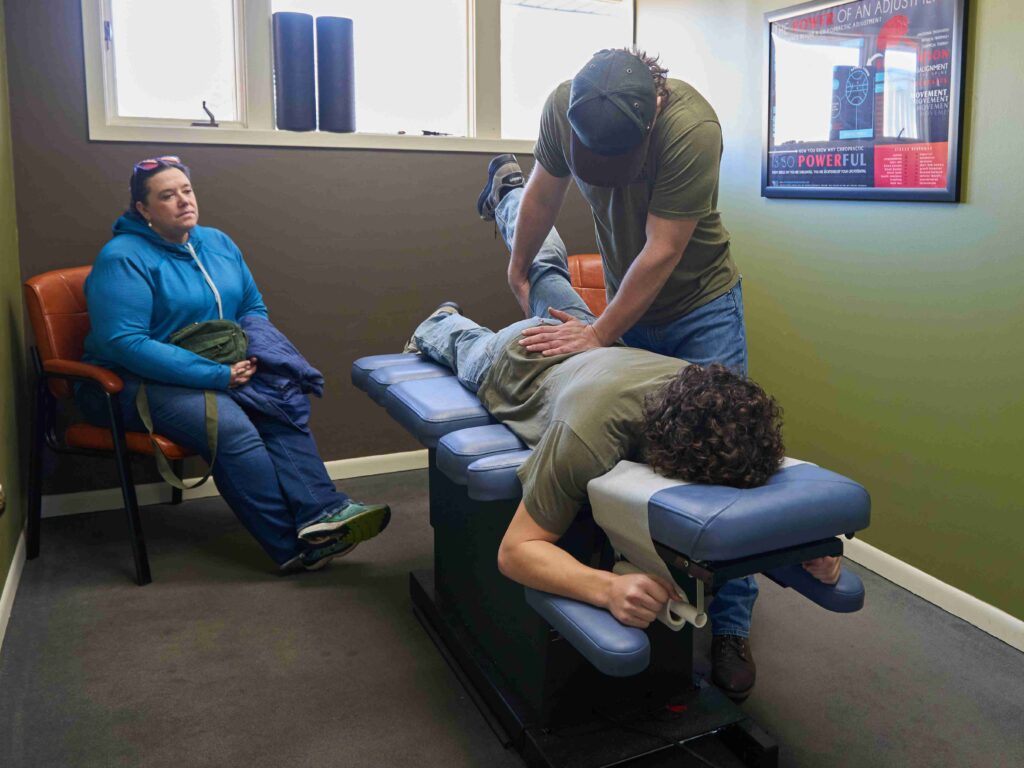
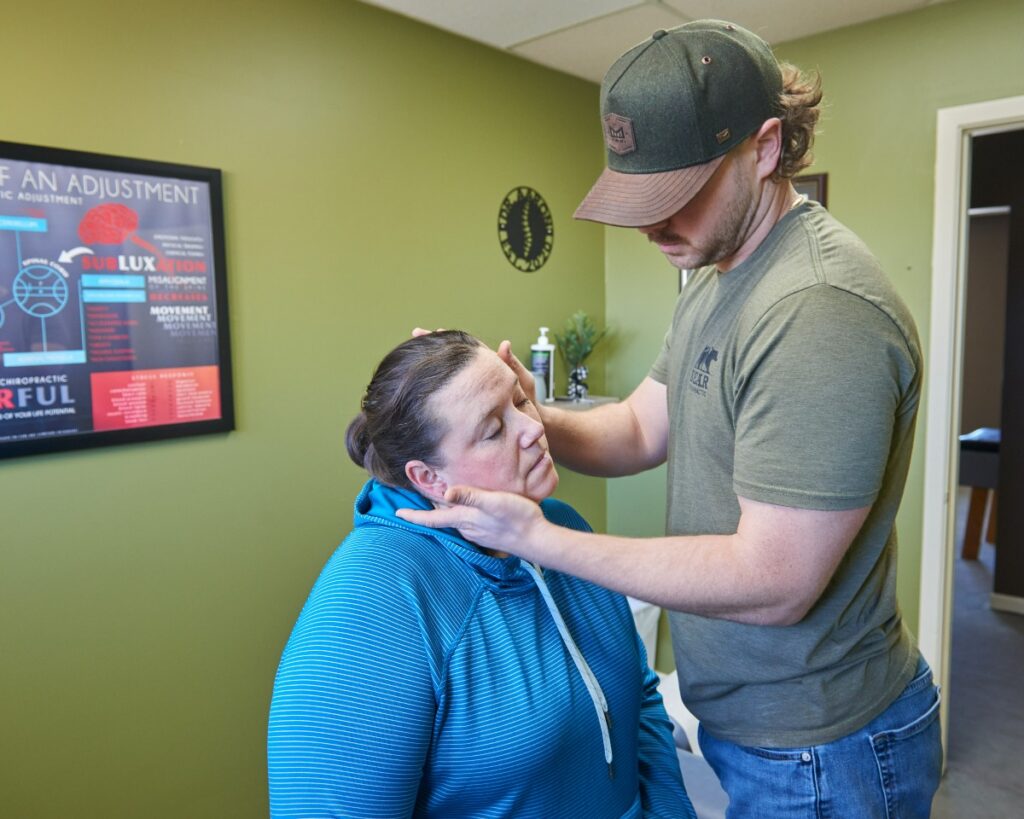
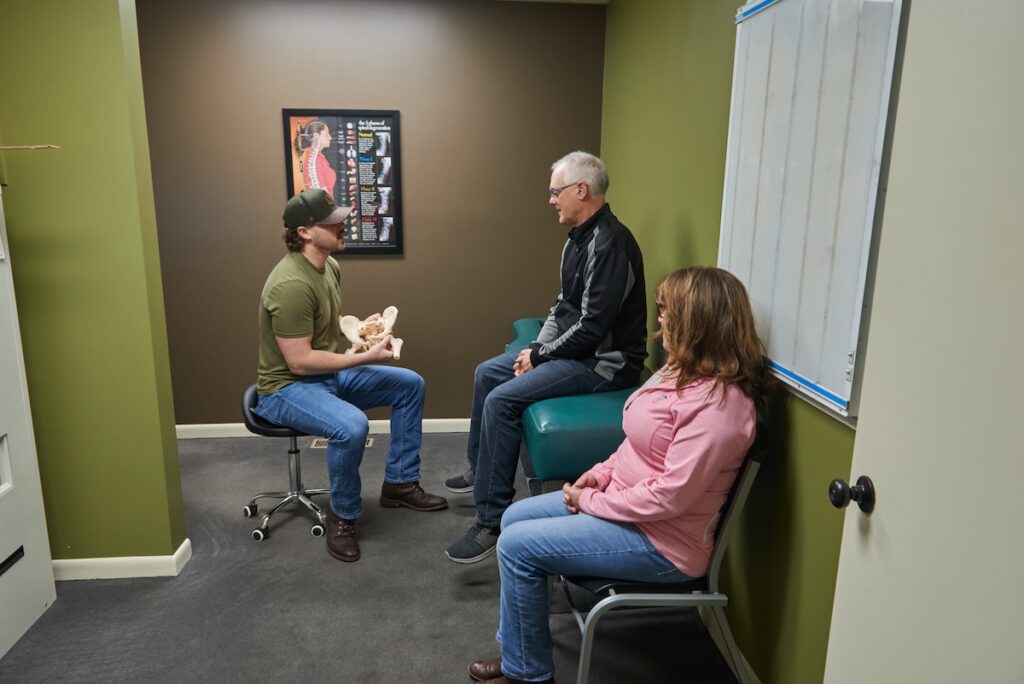
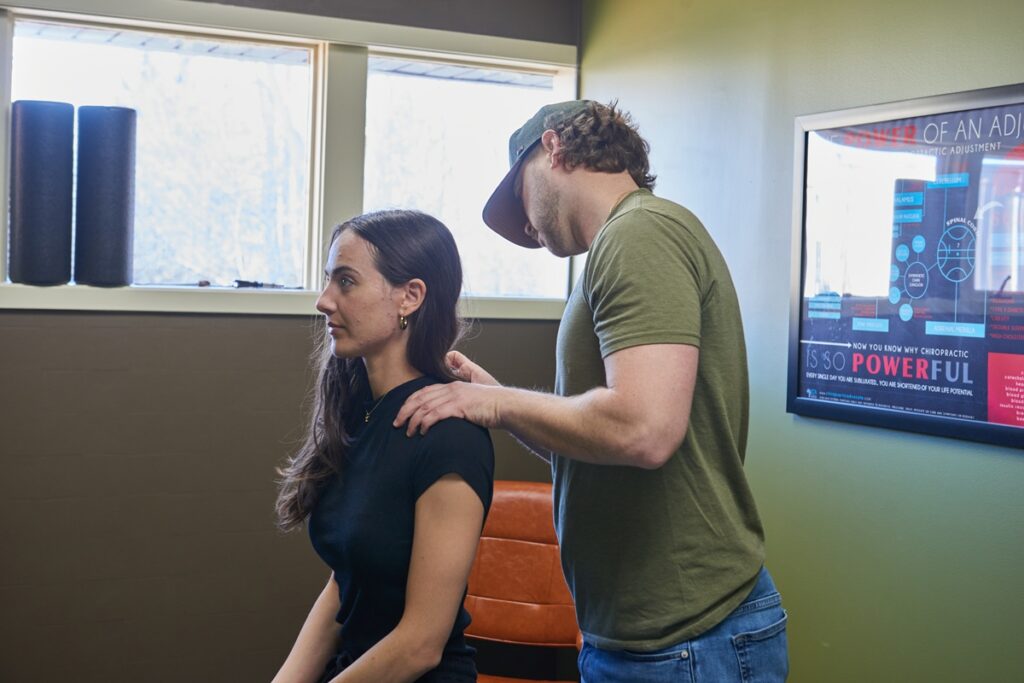
Chiropractic care is a conservative, non-invasive approach to supporting spinal health that focuses on restoring proper alignment, improving joint mobility, and reducing nerve interference. At Bear Chiropractic in Grand Rapids, Dr. Aaron Zimmerman takes a thorough, individualized approach to evaluating each patient — looking not just at where it hurts, but at the broader patterns of posture, movement, and muscle function that may be contributing to the problem.
Chiropractic adjustments address joint restrictions, which are areas where spinal segments are not moving as freely and optimally as they should. When joint mobility is restored, it can help reduce pain, decrease muscle tension, and allow the surrounding tissues to function more normally. Research published through organizations like the American Chiropractic Association and supported by guidelines from bodies such as the American College of Physicians indicates that spinal manipulation is a reasonable first-line approach for many people experiencing mechanical back and neck pain.
In addition to adjustments, the care team at Bear Chiropractic may incorporate soft tissue work, corrective exercises, and personalized postural guidance, giving patients the tools to make meaningful, lasting changes rather than simply managing symptoms.
Practical Tips to Protect Your Spine
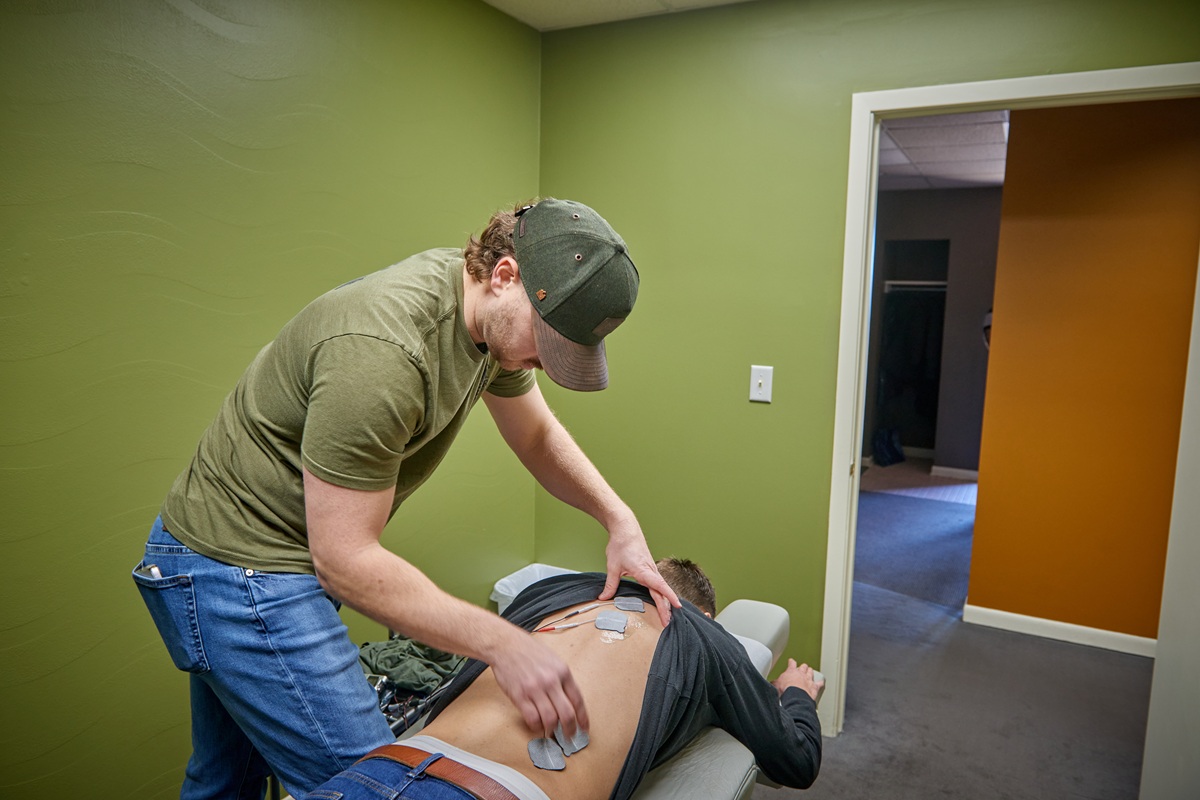
Changing your relationship with sitting doesn’t have to mean radical lifestyle overhaul. Small, consistent changes made over time add up to significant protection for your spine. Here are some straightforward recommendations that Dr. Aaron Zimmerman commonly shares with patients here in the Grand Rapids area.
First, prioritize movement breaks. Setting a timer to stand up, stretch, or walk for even two to three minutes every 30 to 45 minutes can meaningfully reduce the cumulative stress that sitting places on your spine. Movement is medicine, and your discs genuinely need it.
Second, pay attention to your workstation setup. Your monitor should be at eye level so your head stays in a neutral position. Your chair should support the natural curve of your lower back. Your feet should be flat on the floor or on a footrest. These aren’t complicated changes, but they make a real difference over the course of a workday.
Third, don’t neglect the muscles that get switched off by sitting. Incorporating exercises that target the glutes, deep core, and mid-back muscles — even simple ones you can do at home — helps restore the balance that prolonged sitting disrupts. A chiropractor can guide you toward the right movements for your specific situation.
When to See a Chiropractor
Many people wait far longer than they should before seeking care for spinal pain. If you’ve been experiencing persistent neck or back discomfort that has lasted more than a few weeks, or if your symptoms are worsening over time, it’s worth getting a professional evaluation. Pain that has become a regular part of your day is not something you simply have to accept.
There are certain symptoms that warrant prompt medical attention rather than waiting. These include severe pain following trauma or a fall, loss of bladder or bowel control, significant leg weakness, or numbness that is spreading or worsening rapidly. These are red flags that should be evaluated by a medical doctor or in an emergency setting right away.
For the more common presentations of mechanical neck pain, lower back stiffness, radiating discomfort, or posture-related tension, Dr. Aaron Zimmerman and the team at Bear Chiropractic in Grand Rapids, MI are well-positioned to help you understand what’s going on and chart a path forward.
Sitting Habits: What Hurts vs. What Helps
Harmful Sitting Habit |
Spinal Impact |
Healthier Alternative |
|---|---|---|
|
Slouching with rounded lower back |
Flattens lumbar curve, increases disc pressure |
Sit with lumbar support, feet flat on floor |
|
Forward head posture at screen |
Overloads cervical spine and neck muscles |
Position monitor at eye level, chin slightly tucked |
|
Sitting for 2+ hours without a break |
Reduces disc nutrition, tightens hip flexors |
Stand and move for 2-3 minutes every 30-45 minutes |
|
Crossing legs while seated |
Tilts pelvis, creates spinal asymmetry |
Keep both feet on floor, hips level |
|
Reaching forward to keyboard or mouse |
Rounds shoulders, strains upper back |
Keep keyboard and mouse close to body |
|
Tensing shoulders while working |
Overactivates upper trapezius, causes neck pain |
Periodically roll shoulders back and down |
Myths vs. Facts About Sitting and Spine Health
Myth: Back pain from sitting is just part of getting older and there’s nothing you can do.
Fact: While some spinal changes are a natural part of aging, chronic pain from prolonged sitting is largely a mechanical problem, and mechanical problems often respond well to mechanical solutions. Movement, postural correction, and appropriate chiropractic care can make a significant difference at virtually any age.
Myth: If you have back pain, you should rest and avoid movement.
Fact: Current evidence strongly supports staying gently active rather than resting in bed for most types of mechanical back pain. Movement improves circulation, helps maintain disc health, and prevents the muscle weakness that comes from inactivity. The key is moving appropriately, not pushing through severe pain.
Myth: A standing desk eliminates all the problems caused by sitting.
Fact: Standing all day has its own set of problems and can lead to fatigue and different postural strains. The real goal is variety: alternating between sitting, standing, and moving throughout the day. A standing desk is a useful tool, but only when used as part of a balanced movement strategy.
Myth: You have to be in severe pain before chiropractic care is worth pursuing.
Fact: Many people benefit from chiropractic evaluation and care before pain becomes severe. Addressing joint restrictions, postural imbalances, and muscle dysfunction early — before symptoms escalate — is often a far more effective strategy than waiting until the problem has become chronic.
Myth: Chiropractic adjustments are only for the spine.
Fact: While spinal care is certainly a central focus, chiropractors are trained to evaluate and address musculoskeletal issues throughout the body, including the hips, shoulders, and extremities — all of which can be affected by the postural patterns that prolonged sitting creates.
Final Thoughts from Bear Chiropractic in Grand Rapids
Here in Grand Rapids, MI, we live busy, full lives. For many of us, a significant portion of those lives is spent seated. That’s the reality of modern work and modern life, and there’s no judgment in acknowledging it. But understanding how that sitting affects your spine gives you the power to make smarter choices, move more intentionally, and seek help when your body is telling you something isn’t right.
At Bear Chiropractic, Dr. Aaron Zimmerman is genuinely passionate about helping members of the Grand Rapids community feel better in their bodies, not just for a day or a week, but for the long term. Whether you’re dealing with nagging lower back pain, stiff neck and shoulders, or you simply want to be proactive about your spinal health, we’re here to help you understand your body and support you on that journey.
You don’t have to accept discomfort as the price of your daily routine. Your spine is worth taking care of — and it’s never too late to start.
Frequently Asked Questions
How many hours of sitting per day is considered harmful to the spine?
Most research suggests that sitting for more than six to eight hours per day without adequate movement breaks is associated with increased risk of spinal problems and musculoskeletal pain. Even breaking up prolonged sitting with short movement intervals can significantly reduce these risks. The total number matters, but so does how often you interrupt it.
Can chiropractic care reverse the damage caused by years of sitting?
Chiropractic care can help restore joint mobility, reduce pain, improve posture, and support better spinal function, but it works best as part of a broader commitment to healthier movement habits. Some degenerative changes are not reversible, but many people experience meaningful functional improvement even after years of poor postural habits.
Is lower back pain from sitting different from other types of back pain?
Mechanically, yes. Pain that develops from prolonged sitting typically involves a combination of disc pressure, muscle imbalance, and postural distortion rather than a specific acute injury. It often responds well to movement, postural correction, and conservative care like chiropractic treatment. A proper evaluation can clarify the specific contributing factors for your situation.
Does exercise outside of work offset the effects of sitting all day?
Exercise is genuinely beneficial and important for overall health, but evidence suggests it does not completely cancel out the effects of prolonged, uninterrupted sitting. Regular movement breaks throughout the day are important in addition to — not instead of — structured exercise. Both matter for spinal health.
What is the best sitting posture for spinal health?
The best sitting posture maintains the spine’s natural curves: lumbar support for the lower back, shoulders relaxed and back, head balanced over the shoulders, and feet flat on the floor. However, even the best posture becomes harmful if held for too long without a break. Variety and movement are just as important as position.
How do I know if my spine has been affected by prolonged sitting?
Common signs include recurring lower back or neck pain, stiffness after sitting, tingling or numbness into the arms or legs, and reduced flexibility. A thorough evaluation with a chiropractor like Dr. Aaron Zimmerman at Bear Chiropractic can help identify specific areas of dysfunction and guide appropriate next steps.
TL;DR Summary
-
Prolonged sitting increases spinal disc pressure, encourages postural collapse, tightens hip flexors, and weakens the core muscles that protect your spine.
-
Over time, sitting all day can contribute to nerve compression, reduced disc nutrition, muscle imbalances, and potentially accelerated spinal degeneration.
-
Taking movement breaks every 30 to 45 minutes, optimizing your workstation ergonomics, and strengthening key muscle groups are practical steps that can meaningfully protect your spine.
-
Chiropractic care offers a conservative, individualized approach to restoring spinal alignment, improving mobility, and reducing pain related to prolonged sitting.
-
If you’re experiencing persistent neck or back discomfort, Dr. Aaron Zimmerman and the team at Bear Chiropractic in Grand Rapids, MI are here to help you get to the root of the problem and feel better for the long haul.