
Chronic Back Pain Management in Grand Rapids: A Chiropractic-First Guide
Living with chronic back pain can drain your energy, limit your activities, and make even simple tasks feel overwhelming. If you’re here in Grand Rapids and looking for a clear, long-term strategy that prioritizes your spine’s health, you’re in the right place. At Bear Chiropractic, we focus on chiropractic-first, noninvasive solutions designed to help you move better, hurt less, and regain confidence in your body.
In this guide, you’ll learn what chronic back pain really is, why it persists, and how a focused chiropractic plan—including spinal decompression when appropriate—can support lasting relief. You’ll also get practical tips you can start today, so you can feel more in control of your health.
Table of Contents
- What Is Chronic Back Pain?
- Why Chronic Back Pain Matters for Long-term Health
- What’s Happening in Your Back: The Simple Biomechanics
- Common Triggers We See in Grand Rapids
- How Chiropractic Care Manages Chronic Back Pain
- Spinal Decompression at Bear Chiropractic
- Practical Strategies You Can Start Today
- When to See a Chiropractor
- When to Seek Medical Care Urgently
- What to Expect at Bear Chiropractic
- Myths and Facts About Chronic Back Pain
- A Local Message from Bear Chiropractic
- FAQs
- TL;DR
What Is Chronic Back Pain?
Chronic back pain is back pain that lasts 12 weeks or longer, even if it comes and goes. It can involve the lower back, mid back, or upper back, and may include stiffness, aching, or sharp pain with certain movements.
Why Chronic Back Pain Matters for Long-term Health
Pain that lingers often leads to protective habits—moving less, tensing muscles, and avoiding activities. Over time, those habits can weaken stabilizing muscles and limit joint motion. That creates a cycle where pain leads to stiffness, and stiffness feeds more pain.
Your spine protects your nervous system and anchors your posture. When spinal joints don’t move well, the body adapts in ways that can stress discs, muscles, and nerves. Addressing alignment and mobility early helps break the cycle and supports healthier movement patterns long-term.
Major clinical guidelines support starting with conservative, noninvasive spine care such as spinal manipulation for many people with back pain. Research suggests manipulation can improve pain and function for low back pain when included in a well-structured plan. Sources: American College of Physicians; NCCIH.
What’s Happening in Your Back: The Simple Biomechanics
Your back is a team effort. Vertebrae stack like building blocks. Discs act as cushions. Facet joints guide motion. Ligaments support. Muscles stabilize and move you.
When one part isn’t doing its job, nearby tissues take on extra work. If a joint is stiff, another joint may move too much. If deep stabilizers are fatigued, surface muscles tighten to protect. This imbalance can irritate joints, strain muscles, and sensitize nerves over time.
| Common Cause | How It Affects the Spine |
|---|---|
| Prolonged sitting/slouching | Loads discs and weakens core support, increasing stiffness and pain with standing |
| Old sprains/overuse | Creates guarded movement and trigger points that limit motion |
| Repetitive bending or lifting | Stresses discs and facet joints, sometimes irritating nearby nerves |
| Poor sleep posture | Keeps muscles tense, leading to morning stiffness |
| Deconditioning | Weakens stabilizers, forcing other muscles to overwork and ache |
Common Triggers We See in Grand Rapids
Here in Grand Rapids, we often see patterns linked to our local lifestyles. Many patients have desk-heavy workdays, long commutes, and weekend projects. Winter brings snow shoveling and icy slips. Summer brings yardwork and lake gear lifting.
These are normal parts of Michigan life. The key is that your spine stays adaptable. When joints move well and muscles share the workload, your back handles these demands far better—and recovers faster when it’s sore.
How Chiropractic Care Manages Chronic Back Pain
At Bear Chiropractic, chiropractic care is the frontline strategy for chronic back pain management. We evaluate how your spine moves, how your posture holds up during the day, and which tissues are under stress. Then we build a plan to restore better motion, reduce irritation, and help you move with confidence.
What that often includes:
- Precise spinal adjustments. Gentle, targeted adjustments help restore normal joint motion. When joints move better, it eases muscle guarding, reduces joint stress, and supports healthier movement patterns.
- Movement and alignment coaching. We’ll show you simple ways to sit, stand, and lift so your spine shares the workload. Small daily changes add up to big relief over time.
- Progressive home strategies. You’ll get clear, manageable steps to support stability and flexibility between visits. Consistency is what turns short-term relief into long-term results.
Spinal manipulation has been shown to help many patients with back pain improve pain and function when used appropriately. Our approach is evidence-informed, individualized, and focused on lasting change, not just temporary symptom relief. Sources: NCCIH; ACP.
Spinal Decompression at Bear Chiropractic
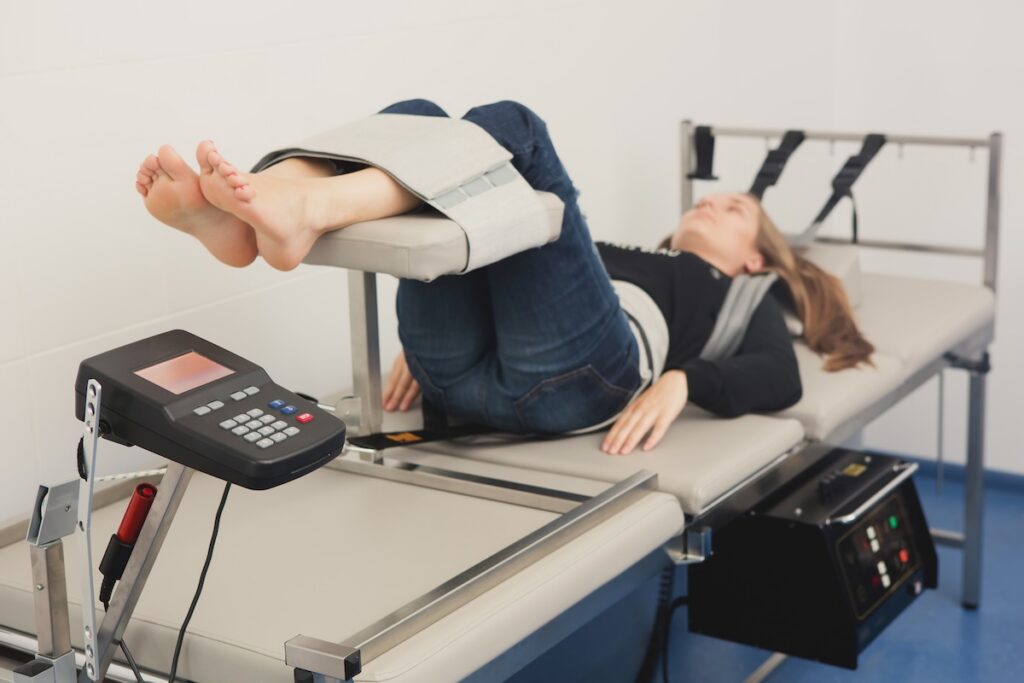
For some chronic back pain cases—especially those involving disc bulges, degenerative disc changes, or nerve irritation—non-surgical spinal decompression may be part of your plan. Decompression uses a specialized table to apply gentle, computer-guided traction. The goal is to create a small, controlled stretch in the spine that may reduce pressure on discs and nerves.
What patients often appreciate about decompression is its comfort and precision. Sessions are typically relaxing. Over a series of visits, this approach can complement adjustments by improving disc hydration and mobility tolerance. While individual responses vary, many people report improved flexibility and reduced radiating symptoms as part of a comprehensive chiropractic plan.
Decompression isn’t right for everyone. We’ll review your history, examine your spine, and only recommend it when it fits your goals and clinical picture. If it’s not appropriate, we’ll outline other chiropractic options to move you forward safely.
Practical Strategies You Can Start Today
Small, consistent habits make a real difference. Try these at home and at work:
- Move every 30–45 minutes. Stand, walk a minute, or do 5–6 gentle backbends to reset posture.
- Set your chair so hips are slightly higher than knees, feet flat, and low back supported by the chair or a small pillow.
- Keep screens at eye level. Your ears should line up over your shoulders—not forward.
- When lifting, keep the load close, hinge at the hips, and exhale as you stand. Avoid twisting with weight.
- Sleep on your side with a pillow between the knees, or on your back with a pillow under the knees to reduce lumbar strain.
- Walk most days. Even 10–15 minutes helps circulation, joint motion, and mood.
- Stay hydrated and vary your activities. Your discs and muscles prefer variety over marathon work sessions.
When to See a Chiropractor
It’s time to schedule a chiropractic evaluation if:
- You’ve had back pain for more than 2–3 weeks, even if it fluctuates.
- You’re experiencing repeated flare-ups that interrupt work, sleep, or activities.
- You feel stiff most mornings and have trouble standing up straight after sitting.
- You notice pain that limits walking, lifting, or enjoying time with family.
Chiropractic care is well-suited for these situations because it addresses joint motion, muscular balance, and nerve irritation—core drivers of chronic back issues. Early attention prevents small problems from growing into long-lasting limitations.
When to Seek Medical Care Urgently
Back pain can be serious when accompanied by “red flags.” Seek immediate medical attention (ER or urgent care) if you have:
- New bowel or bladder loss of control, numbness in the saddle area, or rapidly worsening leg weakness.
- Unexplained fever, chills, night sweats, or significant unintentional weight loss with back pain.
- Severe pain after major trauma, or a history of cancer with new, constant night pain.
At Bear Chiropractic, your safety comes first. If your evaluation suggests you need medical imaging or a referral, we’ll coordinate that promptly.
What to Expect at Bear Chiropractic
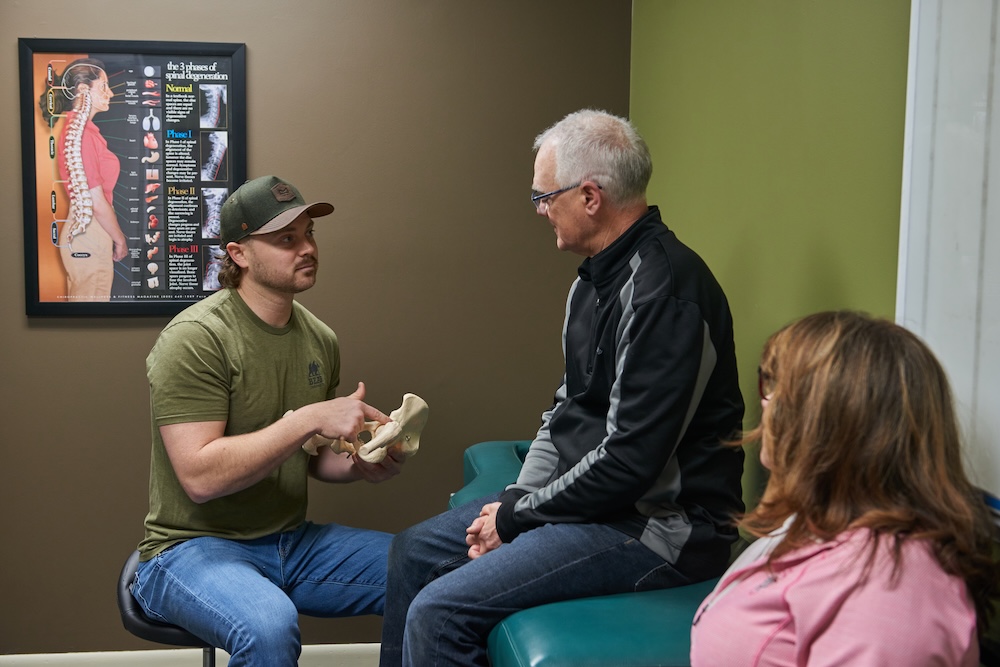
- Conversation and exam. We’ll discuss your history, daily demands, and goals. Then we evaluate posture, joint motion, muscle tone, and neurological indicators to pinpoint what’s driving your pain.
- Clear plan. You’ll receive a chiropractic-first plan built around your findings—focused on adjustments, movement strategies, and, when appropriate, spinal decompression to support long-term relief.
- Measurable progress. We track your improvements in motion, activities, and comfort. Expect practical guidance at each step, so you know what to do at home and what to avoid.
- Education for the long game. Relief is important, but resilience is the goal. We’ll help you understand what your spine needs so flare-ups are shorter, milder, and less frequent.
Myths and Facts About Chronic Back Pain
- Myth: “If my back hurts, I should rest until it goes away.” Fact: Brief rest can help after a strain, but prolonged inactivity often makes chronic back pain worse. Gentle movement and restoring joint motion are key parts of recovery.
- Myth: “If imaging shows wear-and-tear, I’m stuck with pain.” Fact: Many people with age-related changes on imaging have little or no pain. How your spine moves and how you use it daily strongly influences how you feel.
- Myth: “Adjustments are only for quick fixes.” Fact: Adjustments can provide relief, but their bigger value is restoring healthy motion patterns so you can build durable, long-term improvements.
A Local Message from Bear Chiropractic
Grand Rapids is an active community—work, family, and our Michigan seasons keep us busy. If chronic back pain is holding you back, we’re here to help you return to the things you love with a steady, chiropractic-first plan tailored to you.
If you ever have questions about your spine, posture, or whether spinal decompression might help, reach out. Our team at Bear Chiropractic is honored to serve our neighbors across West Michigan.
FAQs
Is chiropractic care safe for chronic back pain?
For most people, chiropractic care is considered safe when provided by a licensed chiropractor after a proper evaluation. We tailor care to your health history and comfort level.
How long until I feel better with chiropractic?
Some patients feel relief quickly, while others improve steadily over several weeks. The timeline depends on your history, daily habits, and how consistently we can restore and maintain healthy motion.
What’s the difference between an adjustment and spinal decompression?
An adjustment is a precise, hands-on technique to improve joint motion. Spinal decompression is a separate, computer-guided traction therapy designed to gently reduce pressure on discs and nerves. We may use one or both, depending on your needs.
Can chiropractic help sciatica?
Chiropractic care often helps sciatica symptoms by improving spinal motion, reducing joint and soft-tissue irritation, and addressing factors that may irritate the sciatic nerve. Your plan will be based on your specific findings.
Do I need X-rays before starting care?
Not always. We order imaging only when the history or exam indicates it’s necessary for safe, effective care.
Should I keep exercising with chronic back pain?
Gentle, well-chosen movement is usually helpful. We’ll guide you on what to do and what to pause while your spine settles and strengthens.
TL;DR
- Chronic back pain lasts 12+ weeks and often involves joint stiffness, muscle guarding, and nerve irritation.
- A chiropractic-first plan restores motion, reduces irritation, and builds stronger daily habits for long-term relief.
- Spinal decompression may help selected cases with disc-related pain or nerve irritation as part of comprehensive care.
- Simple habits—posture resets, walking, smart lifting, and sleep support—make a big difference over time.
- See a chiropractor for persistent or recurrent pain; seek urgent medical care for red flags like bowel/bladder changes or progressive weakness.